
How do I get started with Driftless?
Getting started is a short loop: read how the product works, create an account, shape one real requirement, and watch it run through gate, execution, and verification. Driftless exists to contain drift, the gap that opens between what a system was decided to be and what it actually is. The steps below turn that loop into concrete actions you can take today, starting from one specification you already need done.
Step 1: See the product at godriftless.ai
Read the homepage first. It walks the full Cascades cycle, shape, gate, ship, verify, and introduces the three product nodes that power it. The Platform is the system of record: projects, initiatives, task board, paired specs, acceptance criteria. The BA Agent turns conviction into structured, testable, sequenced work. The Orchestrator dispatches and manages builder agents, routes shaped work, tracks execution, and feeds results back.
One pass through that page tells you where each stage of a run will live before you create an account.
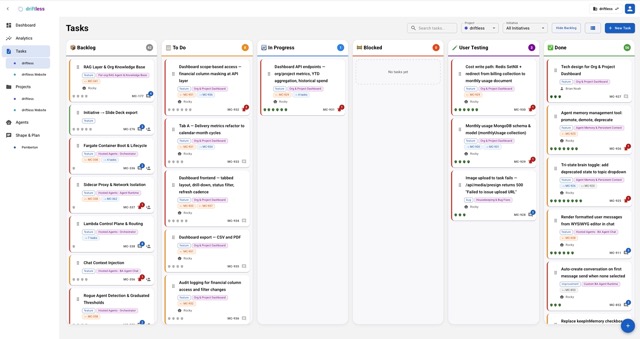
Step 2: Sign in at app.godriftless.ai
Create your account at app.godriftless.ai. Signup is self-serve, the free tier needs no credit card, and nobody follows up unless you ask. You bring your own LLM keys, so your model access stays yours from the first session.
Nothing migrates. Driftless runs against your repositories, agents, and tools as they are, so starting costs you no migration work.
Step 3: Shape your first requirement
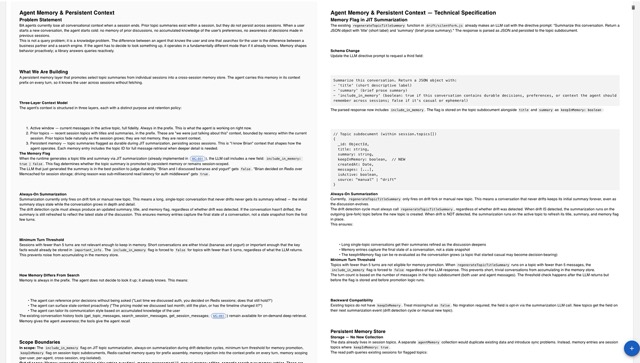
Start with one specification you already need done. A shaped requirement states intent, constraints, and acceptance criteria, and it is written before agents start. The BA Agent does this shaping for you, authoring paired PRDs and tech specs and keeping them in sync.
When the shaped work is ready, the gate holds it until every criterion is objective and buildable. Spec gates catch contradictions before code: PRD versus tech spec conflicts, cross-section collisions, and traceability gaps. A spec that fails the gate is blocked rather than warned, so what reaches execution has already been made buildable.
Step 4: Watch the loop run
Once the spec clears the gate, the Orchestrator dispatches builder agents against it. Persistent agents read directives, write code, run tests, and post updates while execution is tracked. Verification then checks every acceptance criterion against evidence, with CI gates, regression tests, and agentic code review behind it, and failures route back to the stage that caused them.
The run record shows what was done and what it cost, per task, from the first run. The task board stays the system of record while work moves, so you watch the loop instead of babysitting agents.
After your first run
You keep the run record: what the agent did, what it cost, and which criteria passed, whether or not you continue past it. If you run a larger organization and plan a wider rollout, a scoped rollout-design session maps approval boundaries, evidence requirements, and integration points before anything executes.
Do I have to migrate my repositories or tooling?
No. Driftless runs against your repositories and tools as they are, and nothing migrates when you start. Agents execute the spec; the shape, gate, and verify steps wrap around whatever agents you use.